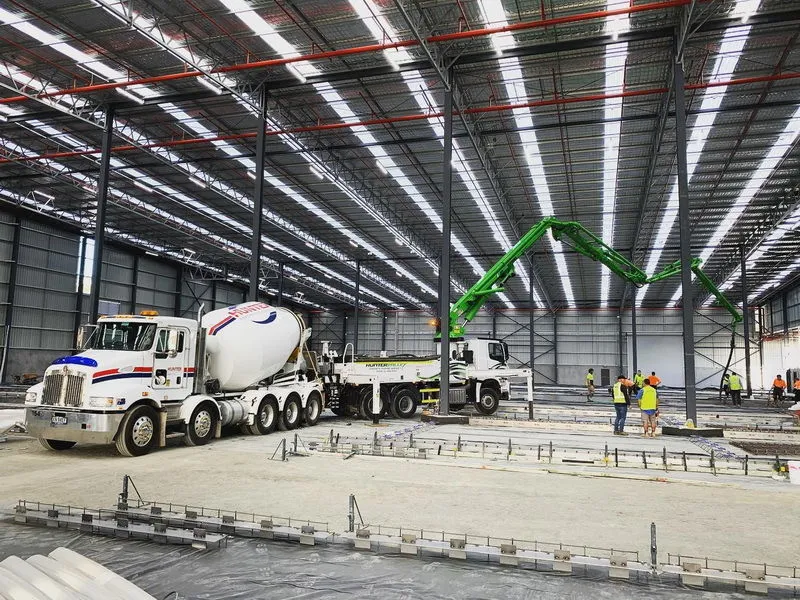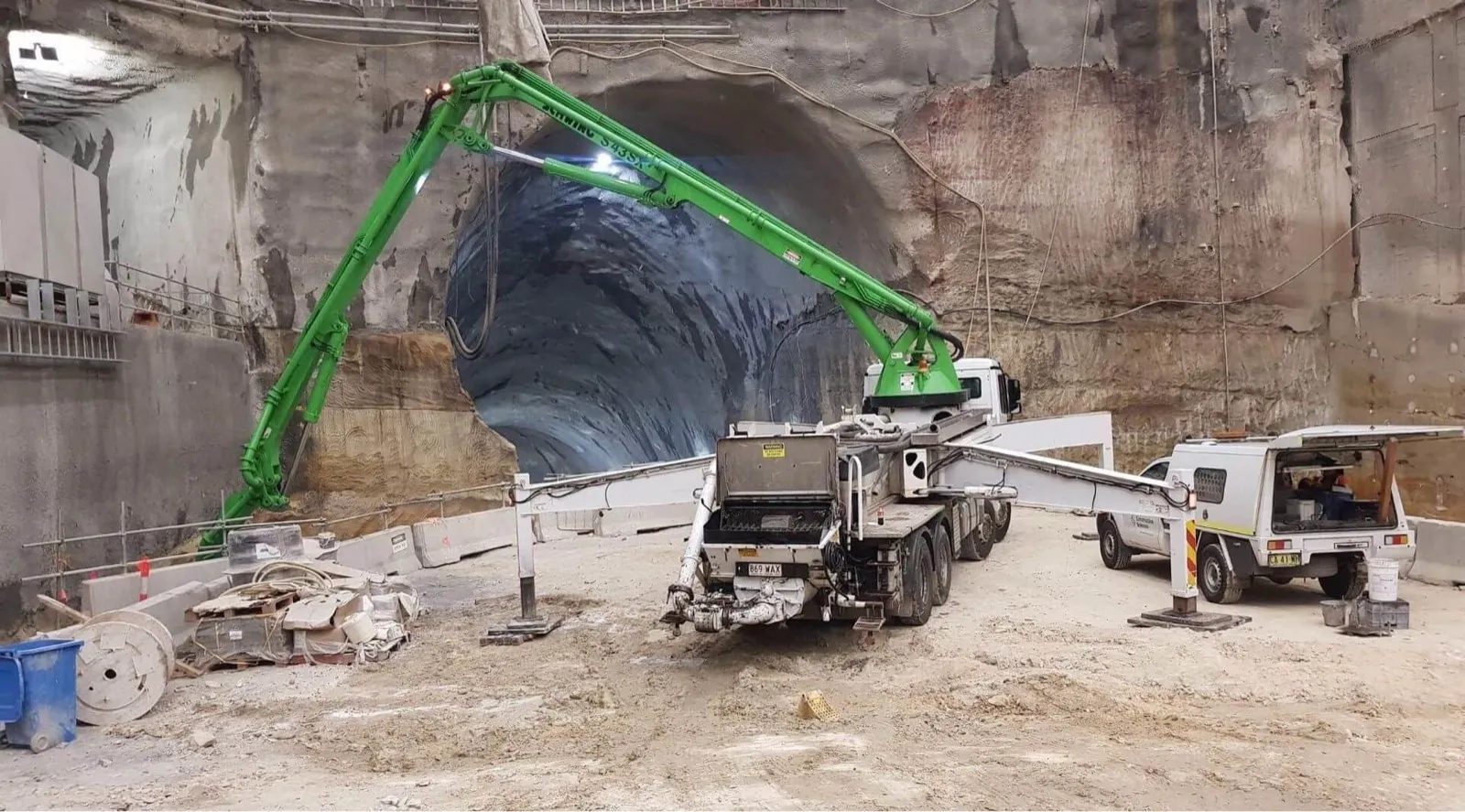
When the pour is down a battleaxe block, behind a finished building, under a structure or hundreds of metres from the nearest truck access, the concrete goes through a ground line. This is its own trade, and we have done it for decades.
A trailer pump sits where the agitator trucks can get to, and pushes concrete through steel and rubber line to the pour. The physics is unforgiving: every metre of line and every bend costs pressure, and a long run on a hot day is a different job from a short one in winter. Getting it right is about matching the pump, the line diameter and the mix to the run.
Our trailer fleet runs from 22 to 102 cubic metres an hour, with high pressure units for the long lines. We supply the pipeline and the linesmen to lay, clamp and strip it, so the run is planned and crewed by people who do it every week, not left to the site to improvise.
Typical line work: basement slabs poured from the street, backyard pools and slabs with no side access, tunnels and underground works, tank bases inside live industrial plants, and staged pours where the line stays rigged between visits.
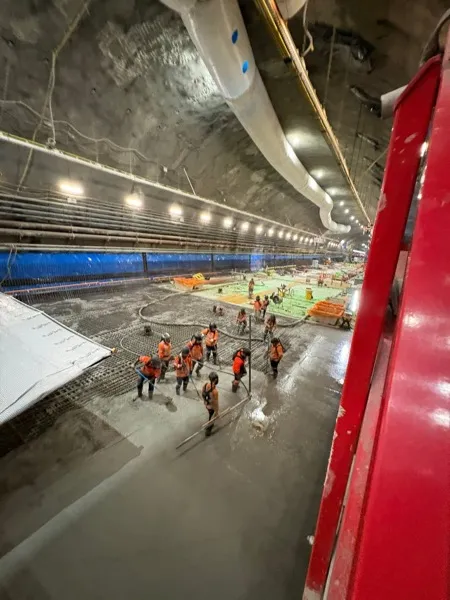
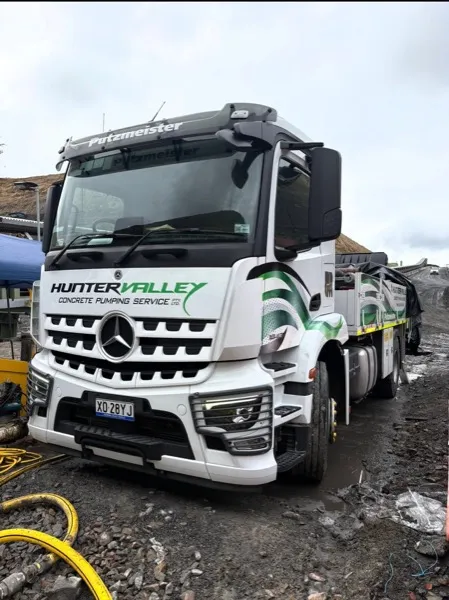
Line work from our Sydney Metro and mine drift projects.
Schwing trailer pumps. Manufacturer spec sheets: TP 100 D, SP 750-18, SP 1000, SP 2000, SP 3800 D (PDF, as published by Schwing).
Putzmeister trailer pumps. Manufacturer spec sheets: 1409, 2109, 2110 (PDF, as published by Putzmeister).
Volume, date, and what the access looks like. We will come back with the right unit for the job, and if the site is tricky we will look at it first.