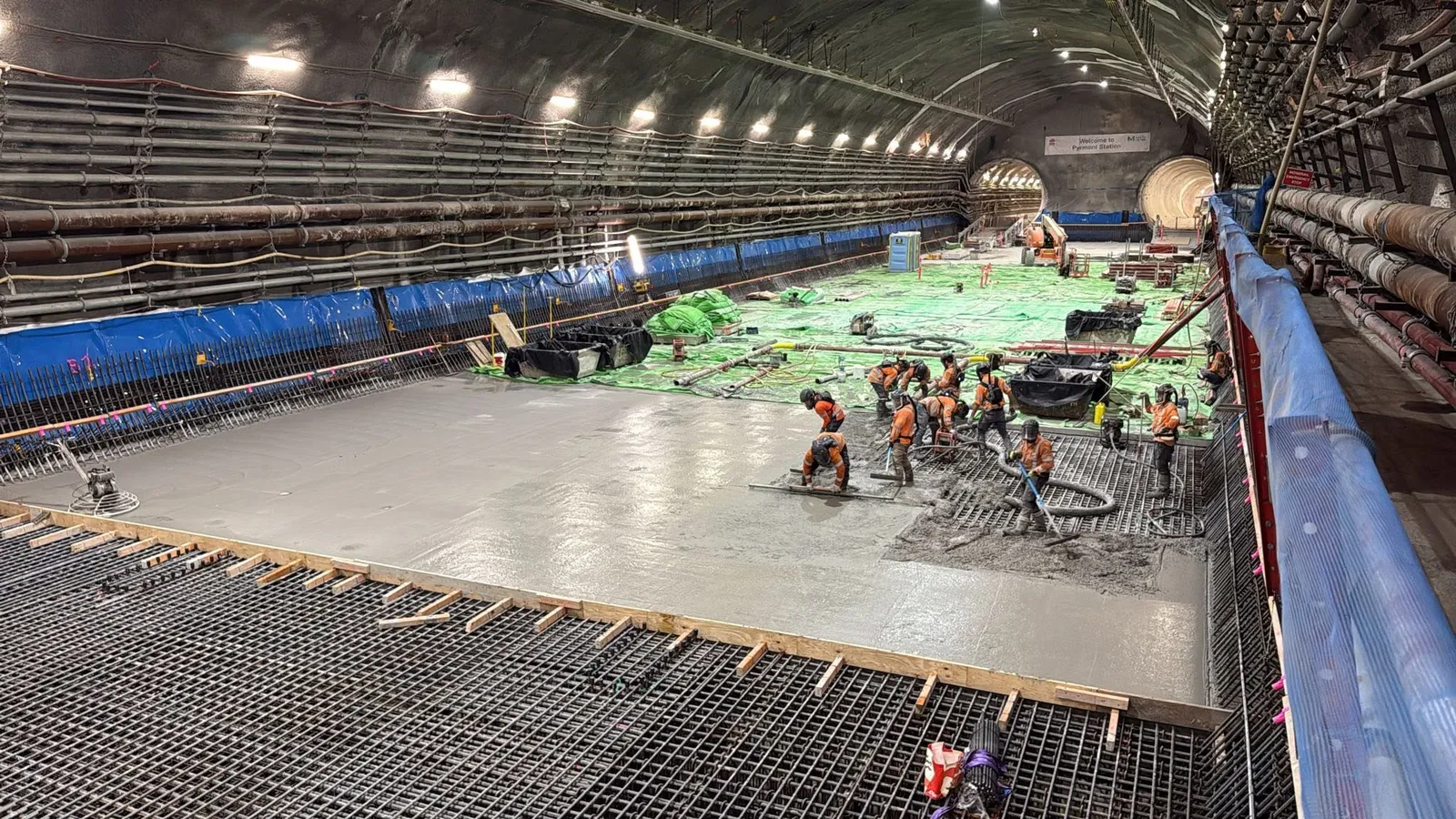
A 650 metre line push under the city, feeding pours of up to 1,400 cubic metres. Work like this is won metres from daylight, on line discipline and pump reliability.
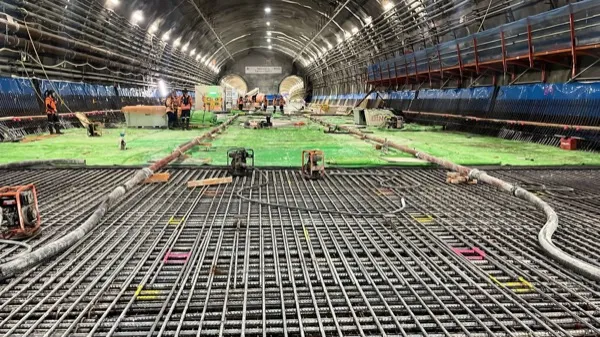
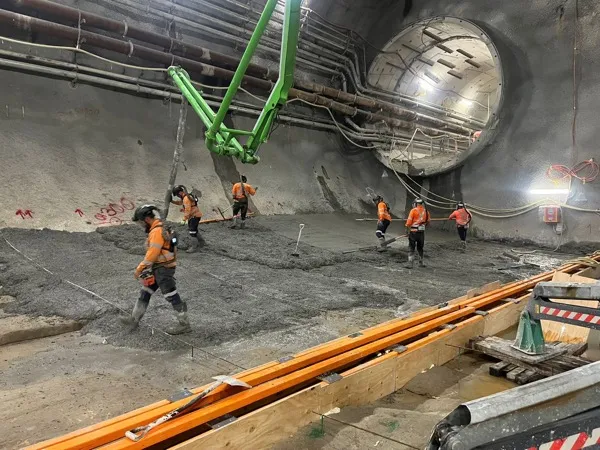
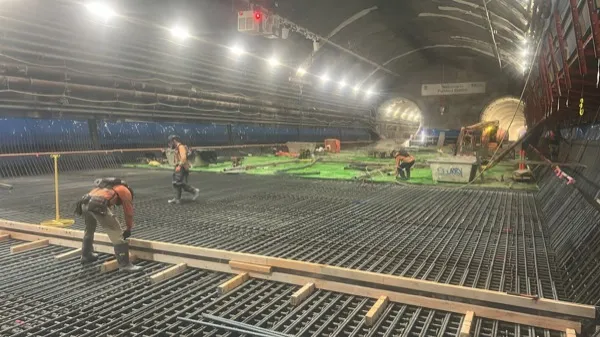
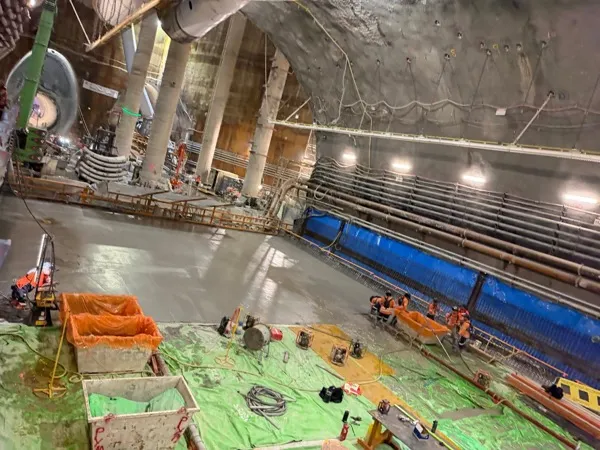
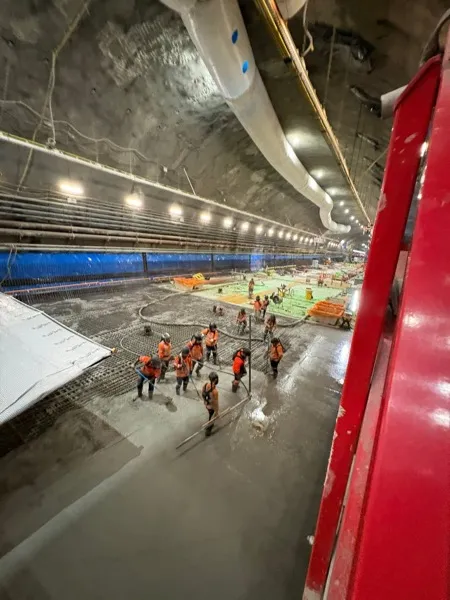
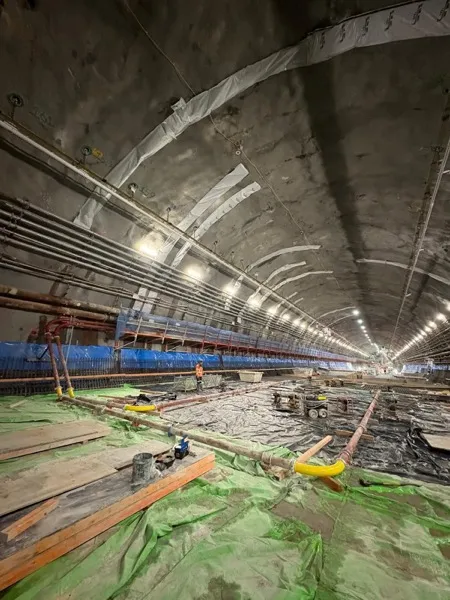
Inside a metro tunnel there is no backing an agitator up to the pour. Every cubic metre travels through a static line, and at Pyrmont East that line ran 650 metres from the surface to the placement face. At that distance the pump is doing serious work: friction over the length of the run means high pressure, sustained, for hours at a time.
We ran the push with two Putzmeister 2110 trailer pumps working together. Pairing pumps on a long line is about more than output. It keeps the pour alive if one unit needs attention, and on 1,400 cubic metre placements that continuity is the difference between a monolithic pour and a cold joint in a rail structure.
Underground rail work also carries the strictest supervision regimes in construction. Our mining background means the compliance habits were already in the crew: pre-starts, line inspections, spotters, and a pour plan agreed before anything moved.
The works completed in February 2026, on program. The photos on this page are ours, taken on the job.
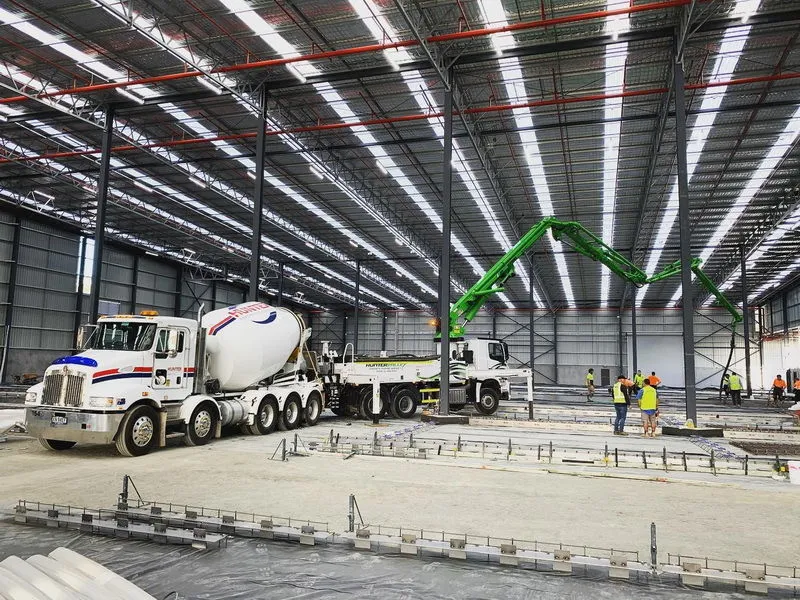
A boom pump is the right tool when reach wins the job. Underground, reach means nothing and pressure means everything, which is why long tunnel pushes run on high pressure trailer pumps and fixed line. The same units carried our 1,550 metre coal mine drift push. If your job needs concrete moved a long way from where a truck can stand, that is a conversation we have had many times.
Volume, date, and what the access looks like. We will come back with the right unit for the job, and if the site is tricky we will look at it first.