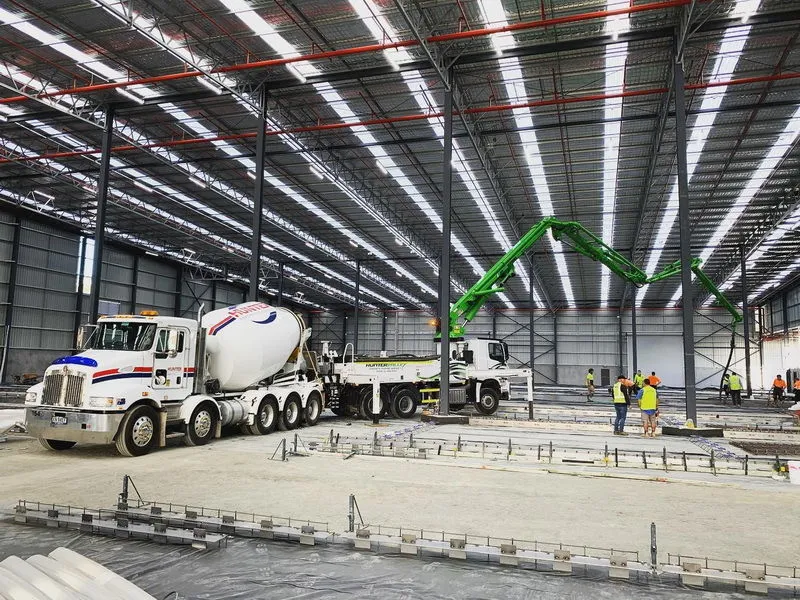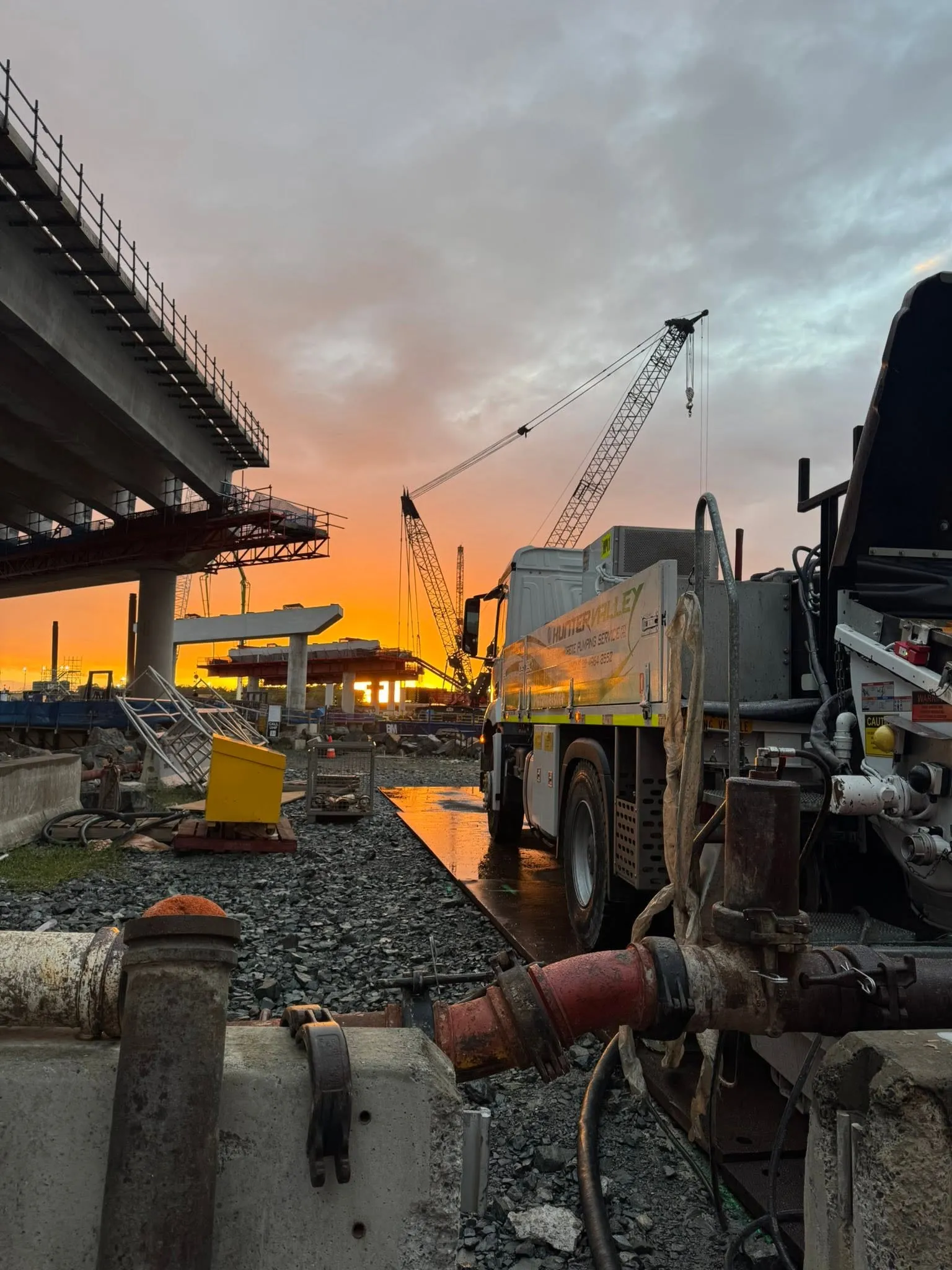
When the structure stands in a river, the concrete still has to arrive on spec and on time. This one took a barge, Bailey bridges and 265 metres of static line.
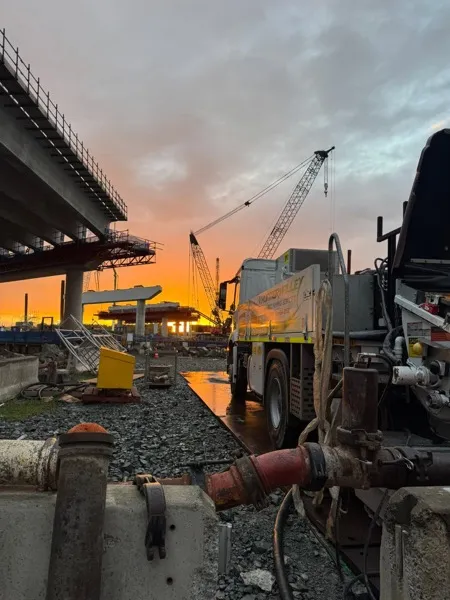
A headstock is the crossbeam that carries a bridge deck on its piers, and this one sat out over the Hunter River on the M12RT project. No truck stands next to that pour. Our answer was to split the system: the Putzmeister 2110 Moli stayed on solid ground, and the placing boom went out on a barge beside the pier.
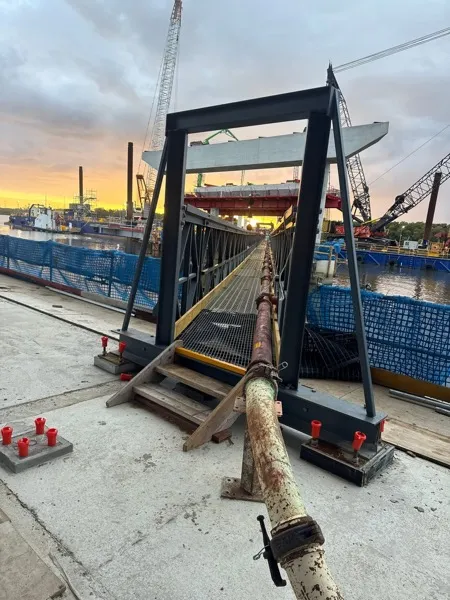
Connecting the two took 265 metres of static line, installed along Bailey bridges spanning the river. Every joint in a run like that is checked before the pour, because a line failure over water is not something you fix mid-placement. The barge adds its own discipline: a placing boom on the water moves with it, so anchoring, ballast and boom positioning are planned with the marine crew before concrete is batched.
The pour completed for the JHGJV. It is the kind of job we quietly enjoy: the concrete is ordinary, and everything around it is not.
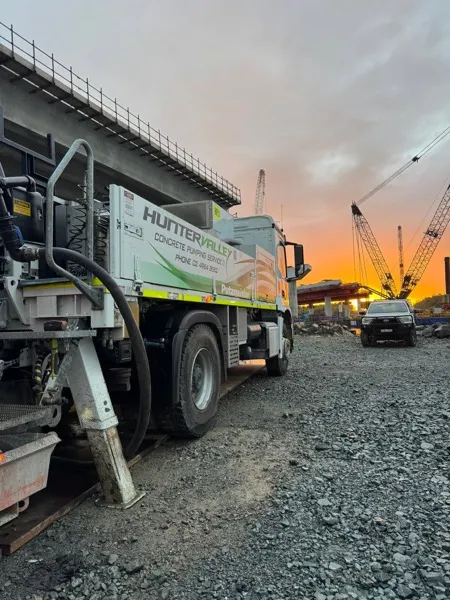
Separate placing booms, static line and high pressure pumps let us put concrete where no truck mounted boom reaches: over water here, 650 metres into a metro tunnel, and 1,550 metres down a mine drift. If your pour looks impossible from the kerb, it probably is not.
Volume, date, and what the access looks like. We will come back with the right unit for the job, and if the site is tricky we will look at it first.