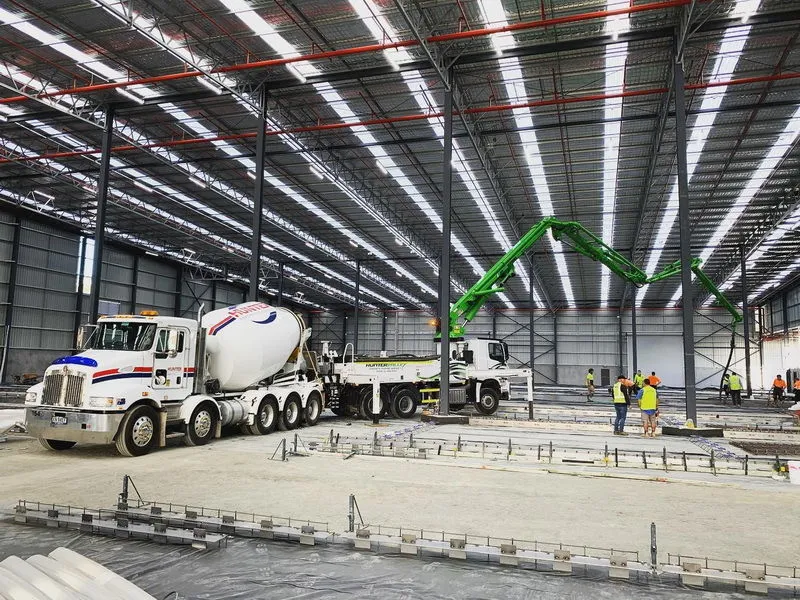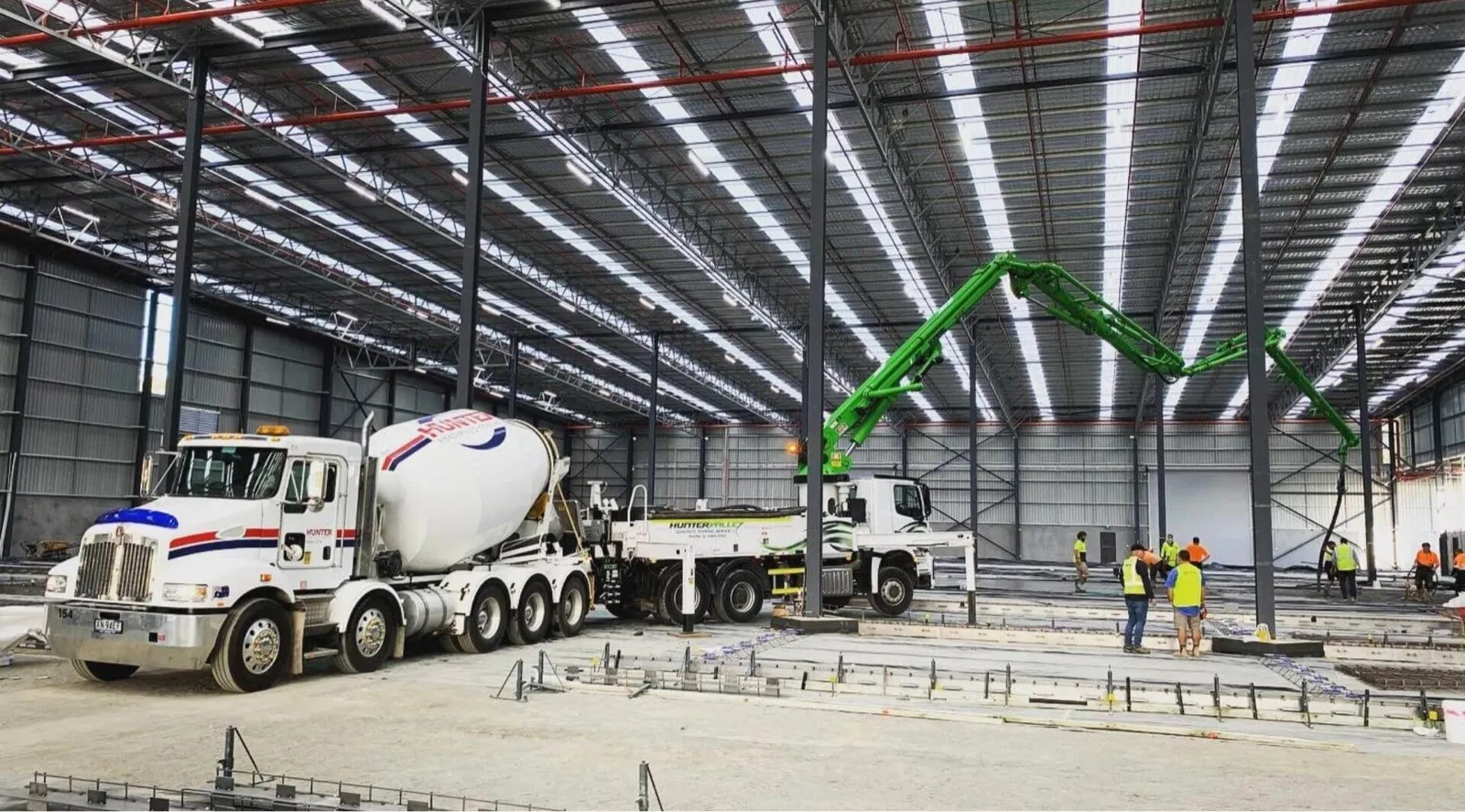
The truck arrives, the outriggers go down, and the boom puts concrete exactly where the formwork needs it. One machine, one operator, and a pour that keeps pace with the trucks.
Volume decides how long the pour takes; the SITE decides the boom. What matters is where the truck can legally and safely stand, and how far the pour is from that spot, up and out. A two storey house behind a narrow frontage can need a bigger boom than a warehouse slab with open access on all sides.
That is why we ask about access before anything else. Overhead power, awkward crossovers, soft ground for the outriggers, a body corporate that wants the street clear by ten: we have set up around all of it since 1980, and if the answer is not obvious from the description we come and look first.
Every boom we run is a Schwing or Putzmeister unit. Rated outputs run from 90 cubic metres an hour on the smallest boom to 170 on the big units, which is faster than most pours can be finished, so the pump is never the bottleneck.
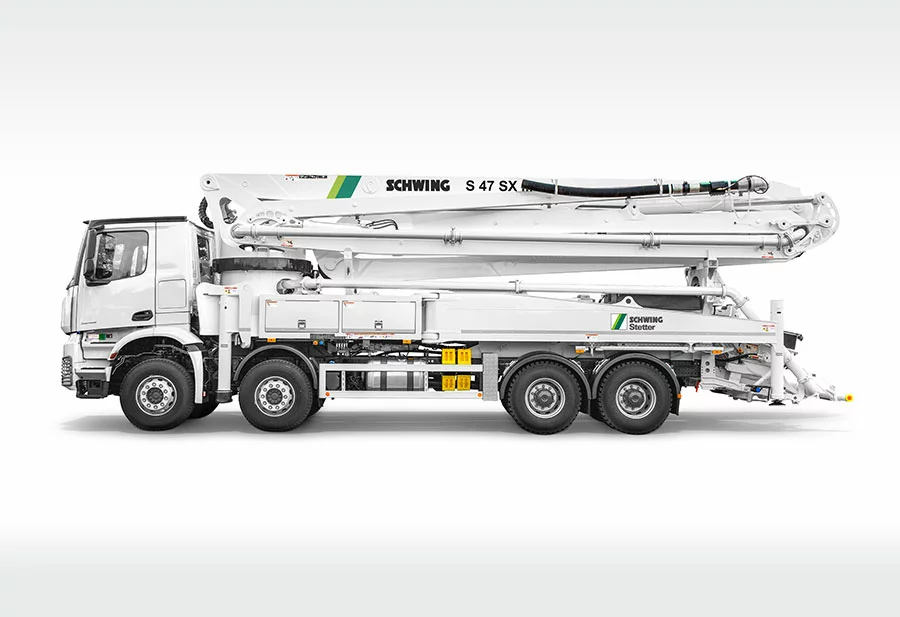
Our Schwing 47 metre boom, Boom 47 R. Photo and spec sheet (PDF).
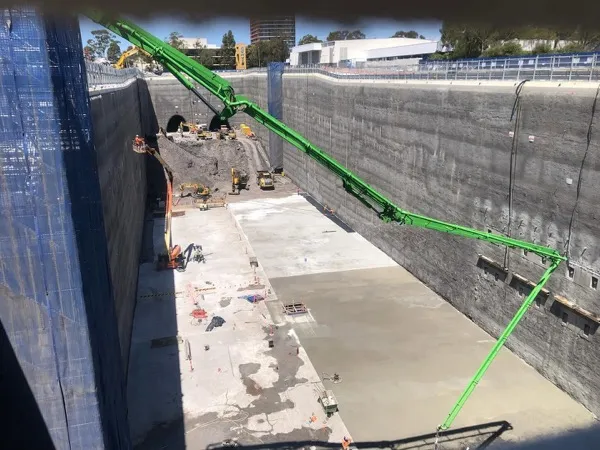
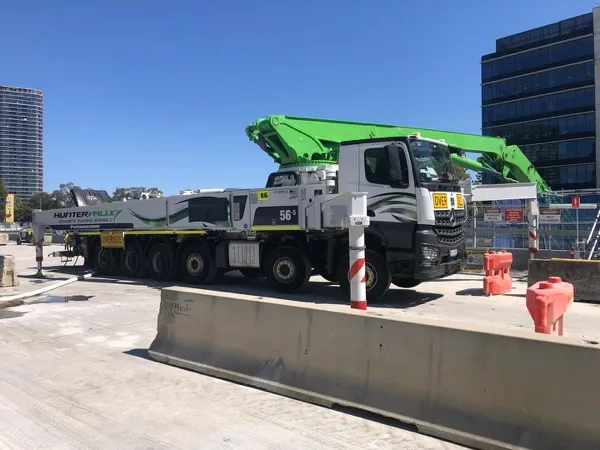
The same reach working for real: down into a dive structure, and a big unit on a motorway job.
Schwing S 20 and S 28 X, Putzmeister BSF 20-4.12 H and M 28-4. House slabs, driveways, pools and garages, and any job where the truck shares a suburban street with parked cars and power lines. Small enough to set up tight, big enough to reach over the house.
Schwing Boom 31 ZRT, S 32 X, Boom 36 R, Boom 36 RZ and S 38 SX Reptor, Putzmeister M 38-5. Commercial slabs, industrial floors, medium civil work. The class most pours land in, with reach to spare for staged pours from one setup.
Putzmeister M 42-5, M 47-5 and M 56-5, Schwing Boom 43 RZ, Boom 47 R and our largest boom, the Schwing 58 metre. Deep sites, major structures and mass pours where fewer setups means a faster, cleaner pour.
Volume, date, and what the access looks like. We will come back with the right unit for the job, and if the site is tricky we will look at it first.